Welcome to the Abstractus blog

Systematic reviews are the closest thing evidence-based research has to a gold standard. They are also slow, expensive, and — for the people actually doing them — largely made of tedium.
We are building Abstractus to remove the tedium without removing the rigour. This blog is where we will write about that work: what we are learning about how review teams actually operate, what we are shipping, and where the hard problems are.
What we will write about
Roughly three things, in whatever proportion turns out to be useful:
- The methodology. Screening protocols, inter-rater reliability, PRISMA reporting, and the practical gap between how reviews are described in papers and how they are conducted in practice.
- The product. What we are building and why.
- The technology. How models and our pipeline behave on screening tasks, where they are reliable, and, more importantly, where they are not.
Why screening in particular
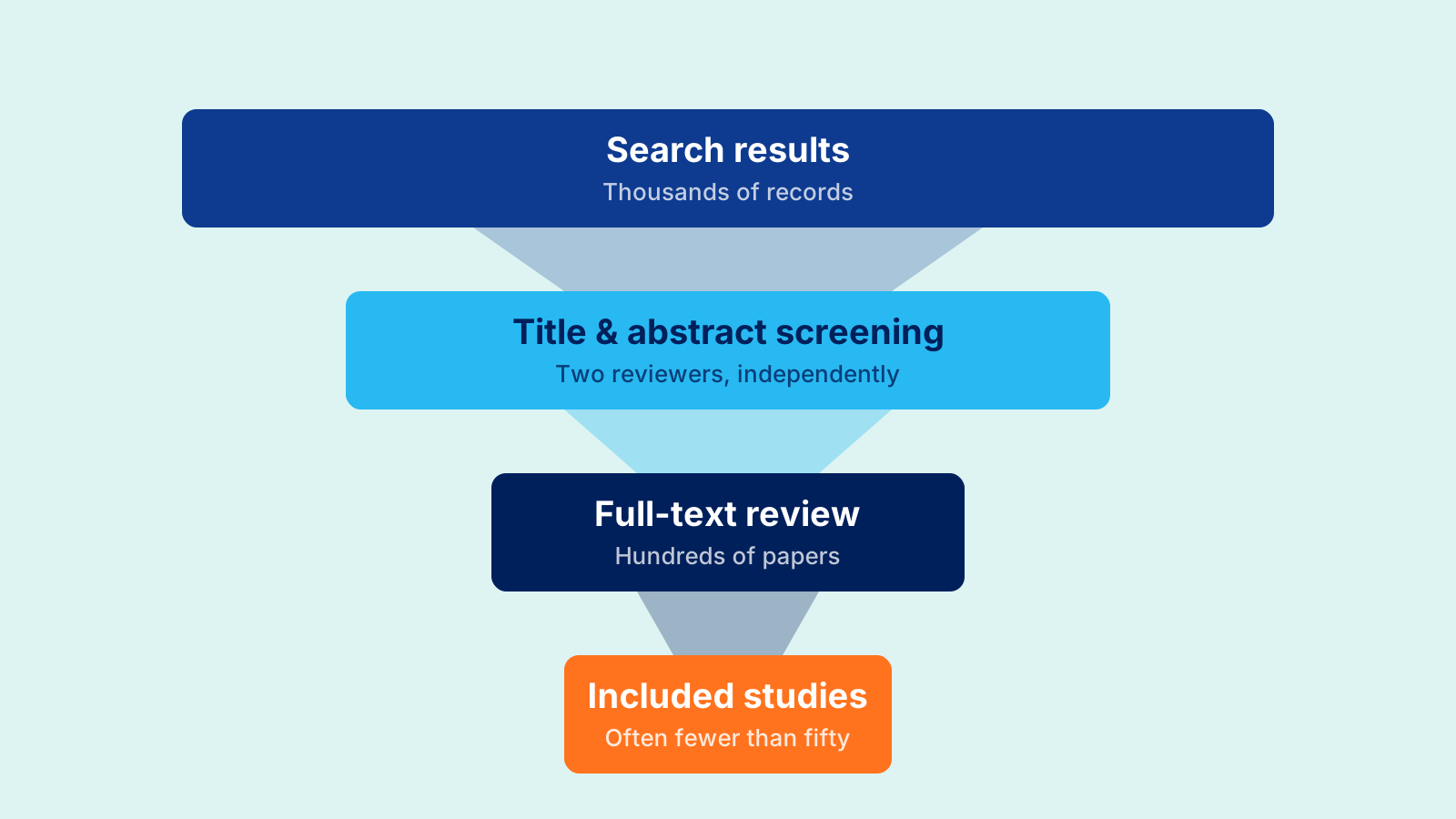
A review team might run a search that returns several thousand records, then read every title and abstract to decide which ones are worth retrieving in full. Usually two reviewers do this independently and then reconcile their disagreements. It is careful, necessary work, and almost all of it consists of reading records that turn out to be irrelevant.
The work is not difficult. There is just an enormous amount of it, and it all has to be done carefully.
That combination — high volume, low complexity, high stakes if you get it wrong — is exactly where good tooling earns its keep. It is also the part of the process where teams most often tell us they lose months.
What to expect
| Topic | Who it is for |
|---|---|
| Method deep-dives | Review teams and information specialists |
| Product changelogs | Anyone using Abstractus |
| Model evaluations | Methodologists and the technically curious |
No fixed schedule. We would rather publish something worth reading occasionally than fill a calendar.
If there is something you want us to write about — or if you are running a review right now and want to talk about it — get in touch. You can also read more about PRISMA if you are new to the reporting standard we keep referring to.